Monday, June 4, 2012
Hero Farewell June 1
Sunday, May 20, 2012
Book! Book! Book!
The question occurred to Jim Cochrane and I many times over the last four years as we have subjected friends, vulnerable students, bosses, family and work colleagues to all the collateral damage that a book creates.
In a time when every possible answer to every possible question can be found instantly on your phone, why bother writing paragraphs, chapters and then struggling to order them into a book with hundreds of footnotes from hundreds of sources?
But.....when you need a whole new paradigm, it takes a book. And that is what we do need amid the broad clutter of practices, vast array of institutional assets, extraordinary flow of finance, high drama over policy and, finally, the human pathos of illness, the humans delights of health that all of us journey.
Although rich enough in stories to be useable by most reading adults, this book is unabashedly about theory--why the ones we have are failed and why a new one will help us transform the world. That's what theories do and we really need one now.
It is good when good thing happen, even when we don't know why. So when something "works" in a hospital, HIV Aids clinic, church or public health program, we are happy. But if you want it to happen again, you have to have an idea of what you did right. And to know that, you need to know why it was right and how it relates to other things that work, too. You need a theory.
The goose that lays the golden egg of practices, technologies, choices and policies that transform community is good theory. Not everyone thinks we have time for theory. This is why the most powerful theories are the ones you don't know you have. When a Chief Finance Officer says "let's be realistic" he is acting out of a theory (although most would hate the thought). Thus Jim and I spend some time taking apart the old paradigms, going back to the history of faith and health to find the repressed threads of coherence we need to reweave.
But most of our time is invested in stretching widely around a body of ideas that have taken hold in the bitter struggles with HIV in Africa and intractable poverty on the Delta. These ideas are already illuminating the way forward on their own, but wrapped in a more adequate paradigm, the ensemble promises far more. So we revisit the ideas of healthworlds, religious health assets, leading causes of life, strengths of congregations, boundary leadership and the global political economic context of our work. Hence all the footnotes! It is a bold, maybe foolish, intellectual presumption that we could do it. It wasn't easy for the publisher, Palgrave, to find anyone in the whole world willing to review such breadth. Someone will surely do this better eventually, but we've given our best to the work as is.
The theoretical work has been tested constantly against the realistic demands of our daily efforts to build the network of congregations in Memphis and then the craft of evaluation and analysis of the outcomes. Likewise, in Africa where any intellectual work is immediately tested in that most severe climate.
Over the next few weeks I'll be doing blogs on most of the chapters and suggesting some ways this could be useful even for you. The book is available most everywhere, including Amazon: (http://www.amazon.com/Religion-Health-Public-Shifting-Paradigm/dp/0230341527/ref=sr_1_2?ie=UTF8&qid=1337527203&sr=8-2 ). Some of those reading this blog are over 30, so may enjoy the ebook with its larger type when it is available in a coupe weeks.
Jim and I did our best to blend our thought well, but we draw from a rich community. So we dedicated the book:
with whom we have journeyed along the way
from the Interfaith Health Program,
the African Religious Health Religious Health Assets Programme
and the Center of Excellence for Faith and Health
Saturday, May 12, 2012
A prayer for graduates (especially my own)
Among its many thoughtful traditions, Millsaps College finds a way to include the ordained parents of graduating seniors into the graduation events, which gave me the most wonderful gift--the opportunity to pray for all the graduates during baccalaureate--but especially for my daughter Kathryn, the only classics major in the 2012 class.
Sunday, April 29, 2012
Canyons and committees
Friday, April 20, 2012
Gnat's breath
Slept open to the sky Tuesday night, our first near Havasu Falls in the Canyon. I witnessed Mars red among the blue white stars sharp on black. It moved down the rim until it crossed over the gap and finally out of sight. I opened my eyes to the light of dawn and felt Spring wind on my face and, being me, reached for my Springsteen's Live at Dublin where his soulful first words were, we are all traveling in the footsteps of those who came before." Resting on land the Supai people have walked for a millennia, reminds me that I am here only by history of violence that has benefited me personally at cost to other entire generations to whom this paradise belongs. Their footsteps have been bitter ones. That comes as news to those of us who live on privileges we did not earn, a simple fact that cannot be repaid. That is not to say that we do not now share the world. Springsteen, who knows a bit about privilege himself, closes with "we shall overcome" and means it, just as I do.
If you are a rock, you are more likely to be changed by wind than water. Millennia before sandpaper air and grit sculpted and carved and then removed mountains of stone. Water does it work in relative speed with more drama. The Havasu Falls of postcard fame changed in August 17th of 2008 when a massive storm blew out 80 feet of silt, took it over the falls cutting new channel through the rock burying the campground under 8 feet of new soil. I am sleeping on top of that very newly relocated soil, which puts my whole body in touch with how changeable things are. The postcards have not been updated, but in another few years people will think this is the way it has always been. All along these canyons you can see logs high up on the walls left by floods, some recorded and some before human memory.
People talk about the water, (the flood of 08 and 1910 come up a lot). But it is the wind that does most of the heavy work over time and then more time and more time again. You can't miss it here, but this is just as true on the Delta. Memphis exists because of its several hundred foot high bluff, which is actually the very last little bump left of the tale end of the Appalachians, the rest of which is buried beneath the mud. The Beale Street bump will go too, eventually, as wind will have its way.
So I think about change and how it happens. In human organizations money is water, language wind. If you are a hospital and CMS changes its reimbursements change happens fast. A senator's family needs dialysis and suddenly CMS pays for it for Medicare and suddenly dialysis clinics sprout as mushrooms in the night (still the fasted growing business in south Memphis)(and this really is why dialysis is covered as it is). The Affordable Care Act is like a cloudburst that could blow away ancient channels, cutting new ones in healthcare organizations. But most of the big changes are already being driven by administrative rule-making, forcing hospitals and doctors to be different. The heavy weight of money is already shifting the choices in executive offices and physician offices. Forget the Supreme Court, the new channel is already open.
The power of language is more subtle, but more profound--like the breeze, hardly noticed on any single day. Language of fear, resistance, anxiety, force and hiddeness cripples an organization, binding it to the past and its certain death, for the past is never where life lives. Language of life -- connection, coherence, agency, generativity and hope--tunes the whole social body to the life of the present and thus the future.
"Health" organizations are always adding detail and nuance to the grammar of death, dying and disease. This is relatively new, more or less since the discovery of germ theory in the 1870's. Now we think there are things like germs for almost everything and rarely a week passes when we do not have a new word for a newly recognized condition. Many of them actually do exist so not long afterward somebody gets a grant to figure out what to do about it and sometimes they come up with something that eventually finds its ways into the list of things somebody will pay for and thus it enters into the repertoire of modern medical practice. This has been going on for a century and a half now, accelerating its pace all along the way.
Nothing at all like that has been happening in our understanding of life, which is the thing that gets sick, the process that is interrupted, the daily dance of family, love, work and delight. Life! This is true not just of our intimate scale lives, now so richly detailed by the language of pathology and all its specialists. It is also true of social and organizational life with squadrons of consultants swarming like mosquitos filled with knowledge of anything but vitality.
To blend Mary Oliver and David Bohm: In the presence of the "unlimited," pay attention. Do not go alone. And then, in humility and awe, dialogue. Bohm wrote a book with that title, but you can figure out how to talk, as long as you have some words to work with--words that carry us deeply toward life and those things that lead toward life. Everything that is alive needs a way to do that, including the social bodies informal as friends and formal as hospitals and governments. Language is how human social bodies adapt to the changes and challenges we inevitably face in our brief moments together.
It makes a difference if we have a way to talk to each other about what gives us life, and not just to postpone death. A week in the canyon and it is impossible not to notice that human life is nearly as short as a gnat's breath. The difference between 11, 31 and 61 is no big deal, but neither is the distance between 61 and compost.
I will die, and maybe you too.
But will I ever have lived? The price of admission is to pay attention and talk as if it was a matter of life, not death.
Monday, April 16, 2012
Group Play or Parallel Play?
I was with Dr. James Marks a few months ago at the Robert Wood Johnson Foundation talking about the stunning emergence of the network of health systems taking form after the White House gathering last September. He is a pediatrician and a long veteran of the CDC, so he asked whether the health systems were engaging in "group play or parallel play." Were they just playing in the same room with the same toys or actually playing together? The first is interesting, but the second is more useful.
Maybe another metaphor is better. If you place a number of heart cells together in a neutral medium they will begin beating--together. Nobody has to wire them together; they do that because that is their nature. Somehow they know the rhythm of their life is found in the larger rhythm. Once they find that rhythm, they can find their role in the life of the whole body.
Margret Wheatley, borrowing from the "new science" described how social networks in times of profound change find themselves finding order around "strange attractors" whose lives give help a new rhythm and coherence emerge. People are alive and that is what happens, no more (or less) surprising than the orbits of comets, black holes or the big bang.
In such a world faith is not about the old certainties, but about what has not happened, yet; what is not certain, yet. People of faith and institutions based on faith (such as hospitals like those finding their emergent community now) are marked by optimistic uncertainty, expecting and finding order around strange attractors in these very strange times. This sounds like, but is not, passive acceptance of magic (another kind of false certainty). It is the confidence of people who lean into the future and give themselves--their intelligence, energy, trust--generously. I saw this in Memphis and Winston Salem in two different ways this past week. In Memphis, Gary Shorb, our CEO leaned into the chaos of broken communities by riding with Rev. Bobby Baker and Rev. Dr. Chris Bounds. He found strange attractors, agents of trust and the possibilities of order where most hospitals could only have seen bitter poverty and street after street of incoherent need. So in a few weeks, he is going to bring back the whole senior management team of the hospital to see that these are knowable--and thus actionable--communities. Not easy, but possible.
At Wake Forest I sat in on a town hall convened by Dr. John McConnell and the senior team who were unwrapping the ATI (Accelerated Transformation Initiative). Any hospital without something like that in these wild days is just waiting to get bought. What was different here was the transparency, spirit of adventure and, most striking, humor. This is as scary a body of work as exists, but it doesn't have to be grim. Indeed, the more grim the group, the less likely they are to find their life. Backing away from death won't find the future; you have to lean into it and commit to what hasn't happened, yet.
I suppose each one of those heart cells is afraid, too. But they find a heartbeat and then find themselves to be heart of something larger. Of course they--we--do.
Sunday, April 8, 2012
Martin, Jesus, Floods and Cancer
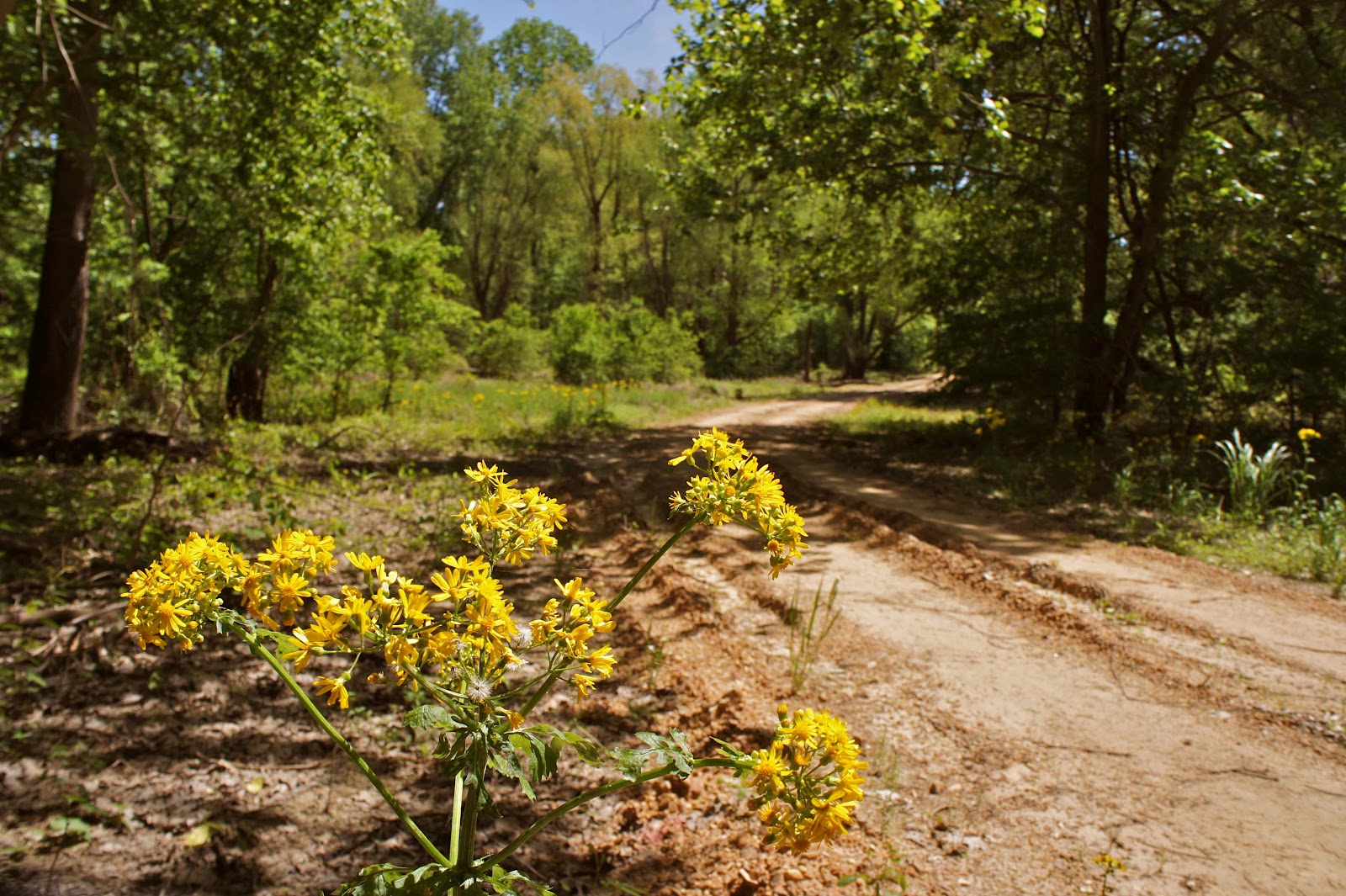
Meanwhile, up from the mud comes Springtime in the South. Even the weeds are gorgeous. The closer you look in any direction you'll see life exploding into every possible place -- some you'd think impossible. This little stretch of mud was under 10 feet of water a year ago, surging easily over the old levee built with shovels and desperate men in the 20's and most of the way up the vast smooth one built with bulldozers afterward. Most of the mud in the picture came from Montana at some point and will end up in the Gulf a millennium of floods from now.
But in the meantime, here we are, with lives not much longer than those of the the insects playing the in sun. What are we to do with our handful of days?
Steven Whitman leads the Sinai Urban Health Institute in Chicago, which studies disparities in health so that people can figure out what to about them. He, and Drs. Orsi and Hurlbert, released an article last week in the journal Cancer Epidemiology that indicated that Memphis has the worst breast cancer mortality disparity among 24 other of the largest cities in the country. Memphians are never surprised to hear something bad about our city, but this one comes at a particularly awkward time. Methodist LeBonheur Healthcare, the West Clinic and the University of Tennessee are just months into a new partnership that is supposed to change the structure of cancer care in the region. The West Clinic has the preeminent Cancer physicians led by deeply missional individuals, an obvious fit for Methodist, which exists to advance the health of the whole community. The findings point out the highly inconvenient truth that the greatest disparity is not the incidence of cancer -- who gets it; but how long people live with it. A "put up or shut up moment," if ever there was one.
Cancer may be hard to prevent; but survival rates should be the same. All we have to do is make sure that everyone gets access to early screening and then all that quick comprehensive treatment offers today. Oh, and it would help if money and race did not affect whether people had reason to trust the pathways to 21st century technology. But they do with the same certainty that the Mississippi is going to flood again. The issue is whether those that live along the pathways relevant to cancer respond with similar energy that the government shows about the river, on which it spendS billions with hardly a blink. They do, because no civilized people would allow the government to stand by and watch Cairo or Hattiesburg or New Orleans disappear as long as we have bulldozers and barges to stop it.
Cancer survival is actually a lot easier than the Mississippi. We have to get everybody aligned and acting in a trustworthy manner, so there is a seamless and transparent relationship between the informal caregivers in the neighborhoods and those with the appropriate medical technologies. We don't need anything we don't have. We have all the assets and social bonds ready to be tied.
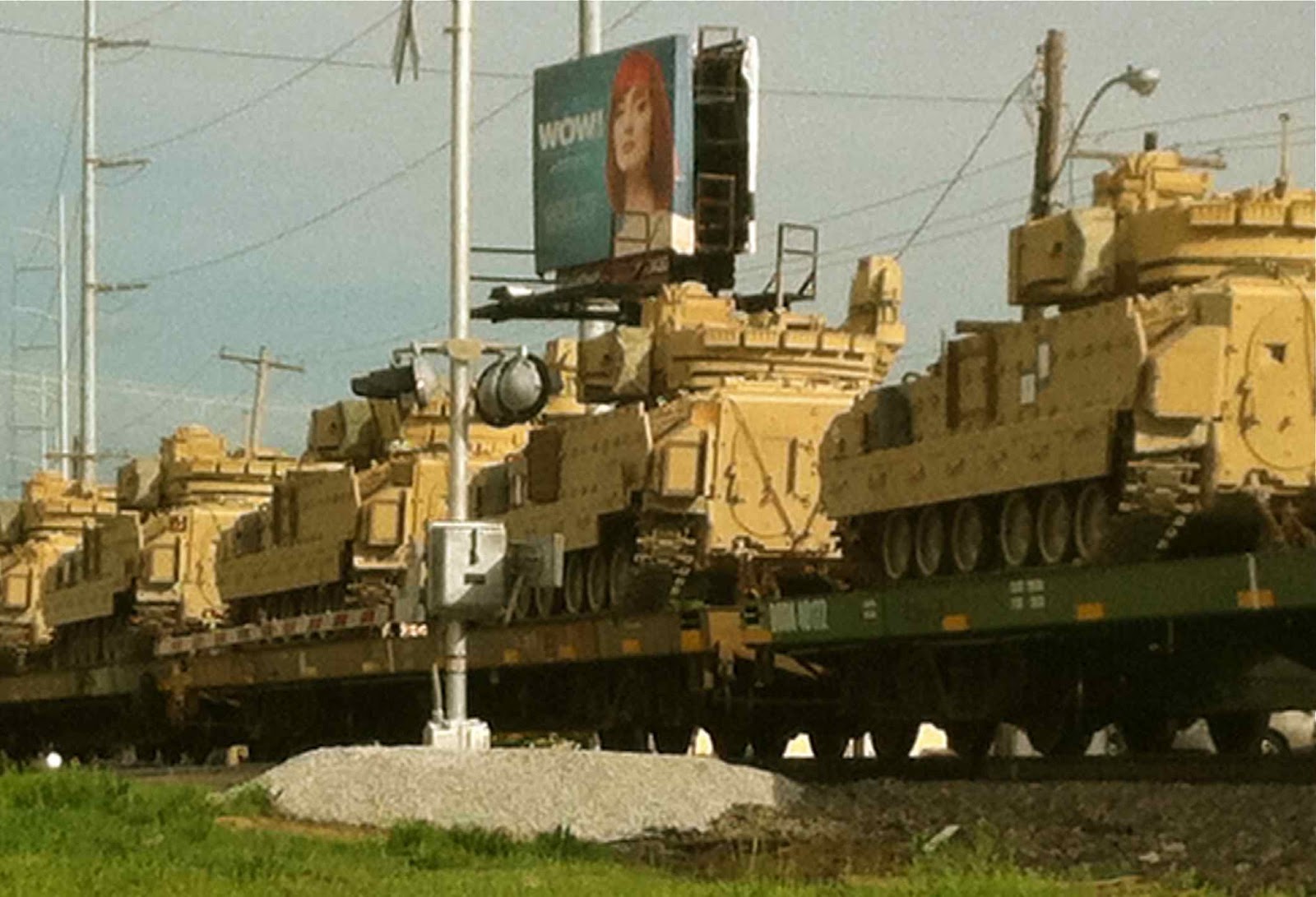
Dr. King would remind us to pay attention and tell the truth about the fears that divide us that only love is powerful enough to heal. I was driving across the city he died in 44 years ago, heard a train coming along side and sat stunned as I realized it was about a mile long of nothing but light brown military equipment. We are a people still at war, money, youth and fear bleeding from our veins every day, every day, every day. And do not know the things that make for peace.It is 2012 and Martin would die again. Jesus would be arrested and ignored again. Both of them killed by social cancers of different kinds striking in patterns we must not deny.
Brad Thomas preached on Mark's version of the resurrection this morning. This is the unfinished one, stopping with the disciples afraid and silent. "Every resurrection story is unfinished," says the preacher. We are the rest of the story. And so it is yet to be seen what we do with Jesus and his awkward radicalizing truth now.