Monday, April 16, 2012

Group Play or Parallel Play?

 I was with Dr. James Marks a few months ago at the Robert Wood Johnson Foundation talking about the stunning emergence of the network of health systems taking form after the White House gathering last September.  He is a pediatrician and a long veteran of the CDC, so he asked whether the health systems were engaging in "group play or parallel play." Were they just playing in the same room with the same toys or actually playing together? The first is interesting, but the second is more useful. 

Maybe another metaphor is better. If you place a number of heart cells together in a neutral medium they will begin beating--together. Nobody has to wire them together; they do that because that is their nature. Somehow they know the rhythm of their life is found in the larger rhythm. Once they find that rhythm, they can find their role in the life of the whole body.

Margret Wheatley, borrowing from the "new science" described how social networks in times of profound change find themselves finding order around "strange attractors" whose lives give help a new rhythm and coherence emerge. People are alive and that is what happens, no more (or less) surprising than the orbits of comets, black holes or the big bang.

In such a world faith is not about the old certainties, but about what has not happened, yet; what is not certain, yet. People of faith and institutions based on faith (such as hospitals like those finding their emergent community now) are marked by optimistic uncertainty, expecting and finding order around strange attractors in these very strange times. This sounds like, but is not, passive acceptance of magic (another kind of false certainty). It is the confidence of people who lean into the future and give themselves--their intelligence, energy, trust--generously. I saw this in Memphis and Winston Salem in two different ways this past week. In Memphis, Gary Shorb, our CEO leaned into the chaos of broken communities by riding with Rev. Bobby Baker and Rev. Dr. Chris Bounds. He found strange attractors, agents of trust and the possibilities of order where most hospitals could only have seen bitter poverty and street after street of incoherent need. So in a few weeks, he is going to bring back the whole senior management team of the hospital to see that these are knowable--and thus actionable--communities. Not easy, but possible.

At Wake Forest I sat in on a town hall convened by Dr. John McConnell and the senior team who were unwrapping the ATI (Accelerated Transformation Initiative). Any hospital without something like that in these wild days is just waiting to get bought. What was different here was the transparency, spirit of adventure and, most striking, humor. This is as scary  a body of work as exists, but it doesn't have to be grim. Indeed, the more grim the group, the less likely they are to find their life. Backing away from death won't find the future; you have to lean into it and commit to what hasn't happened, yet.

I suppose each one of those heart cells is afraid, too. But they find a heartbeat and then find themselves to be  heart of something larger. Of course they--we--do.

Sunday, April 8, 2012

Martin, Jesus, Floods and Cancer


Almost too much going on to write about. Martin died on Wednesday (my Mother's birthday), Jesus arrested Thursday, tortured and killed Friday. And here he is back again on today!

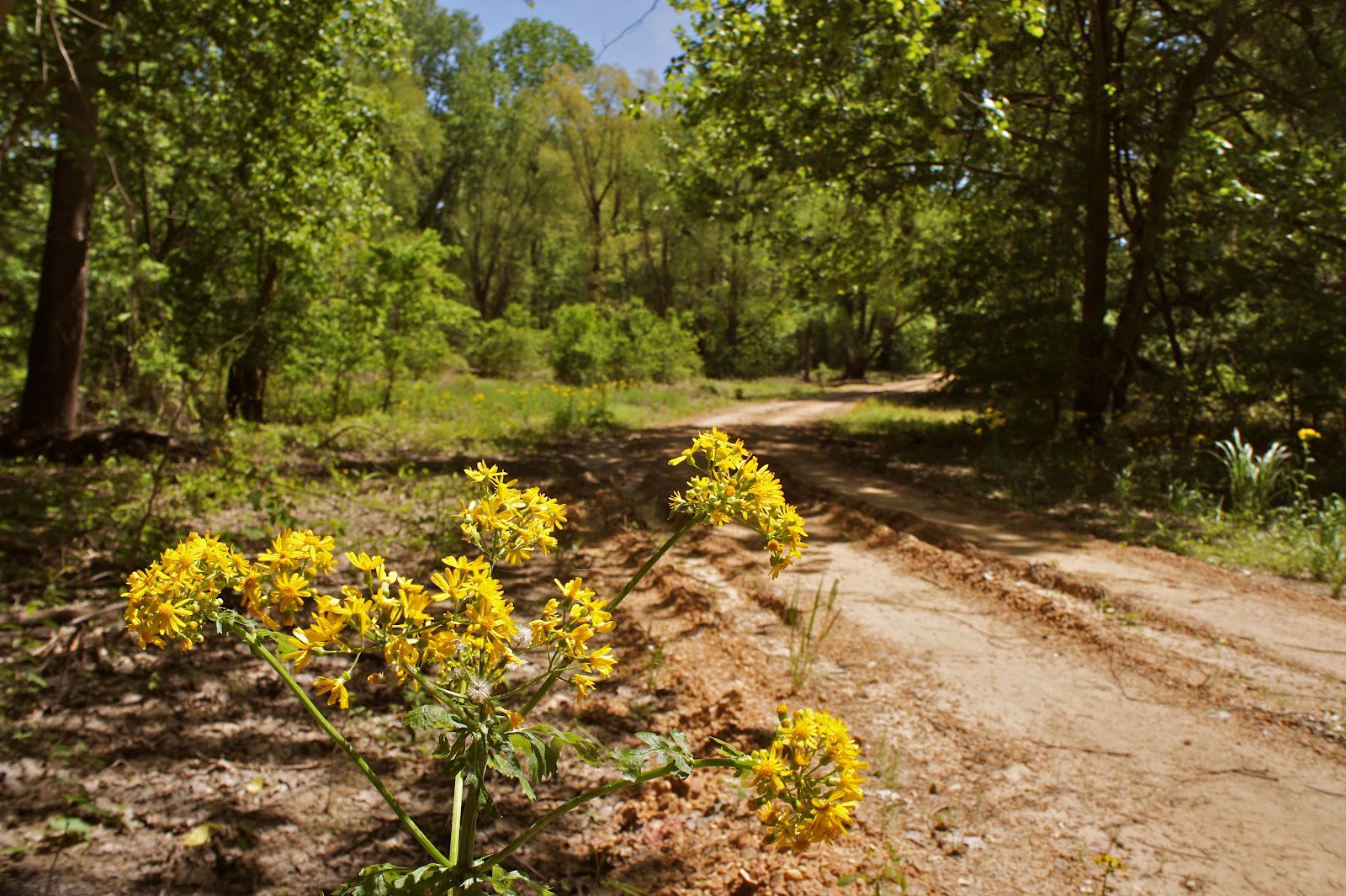
Meanwhile, up from the mud comes Springtime in the South. Even the weeds are gorgeous. The  closer you look in any direction you'll see life exploding into every possible place -- some you'd think impossible. This little stretch of mud was under 10 feet of water a year ago, surging easily over the old levee built with shovels and desperate men in the 20's and most of the way up the vast smooth one built with bulldozers afterward. Most of the mud in the picture came from Montana at some point and will end up in the Gulf a millennium of floods from now.

But in the meantime, here we are, with lives not much longer than those of the the insects playing the in sun. What are we to do with our handful of days?

Steven Whitman leads the Sinai Urban Health Institute in Chicago, which studies disparities in health so that people can figure out what to about them. He, and Drs. Orsi and Hurlbert, released an article last week in the journal Cancer Epidemiology that indicated that Memphis has the worst breast cancer mortality disparity among 24 other of the largest cities in the country. Memphians are never surprised to hear something bad about our city, but this one comes at a particularly awkward time. Methodist LeBonheur Healthcare, the West Clinic and the University of Tennessee are just months into a new partnership that is supposed to change the structure of cancer care in the region. The West Clinic has the preeminent Cancer physicians led by deeply missional individuals, an obvious fit for Methodist, which exists to advance the health of the whole community. The findings point out the highly inconvenient truth that the greatest disparity is not the incidence of cancer -- who gets it; but how long people live with it. A "put up or shut up moment," if ever there was one.

Cancer may be hard to prevent; but survival rates should be the same. All we have to do is make sure that everyone gets access to early screening and then all that quick comprehensive treatment offers today. Oh, and it would help if money and race did not affect whether people had reason to trust the  pathways to 21st century technology. But they do with the same certainty that the Mississippi is going to flood again. The issue is whether those that live along the pathways relevant to cancer respond with similar energy that the government shows about the river, on which it spendS billions with hardly a blink. They do, because no civilized people would allow the government to stand by and watch Cairo or Hattiesburg or New Orleans disappear as long as we have bulldozers and barges to stop it.

Cancer survival is actually a lot easier than the Mississippi. We have to get everybody aligned and acting in a trustworthy manner, so there is a seamless and transparent relationship between the informal caregivers in the neighborhoods and those with the appropriate medical technologies. We don't need anything we don't have. We have all the assets  and social bonds ready to be tied.


Dr. King would remind us to pay attention and tell the truth about the fears that divide us that only love is powerful enough to heal. I was driving across the city he died in 44 years ago, heard a train coming along side and sat stunned as I realized it was about a mile long of nothing but light brown military equipment. We are a people still at war, money, youth and fear bleeding from our veins every day, every day, every day. And do not know the things that make for peace.

It is 2012 and Martin would die again. Jesus would be arrested and ignored again. Both of them killed by social cancers of different kinds striking in patterns we must not deny.

Brad Thomas preached on Mark's version of the resurrection this morning. This is the unfinished one, stopping with the disciples afraid and silent. "Every resurrection story is unfinished," says the preacher. We are the rest of the story. And so it is yet to be seen what we do with Jesus and his awkward radicalizing truth now.


Sunday, March 18, 2012

What? How? Who? Why? (When?)

It's been a big week in Memphis, mostly in spite of me (due to the announcement of my move to Wake Forest this coming July). It has been a good week to remind everyone that the smartest, most resilient and viral aspects of the work has roots deep in the Delta mud, not me.

On Monday a group from the hardscrabble Appalachians came to see if the Congregational Health Network was tough enough for those bitter hills. Staff from Mountain States Health Alliance in Eastern TN and Methodist Hospital in Henderson, KY were the core of the regular "adaptation" workshops. (Not "replication" because every community has different assets to weave with.) Here Valerie Murphy explains how our volunteer CHN Liaisons work with Navigators, their clergy, our chaplains and all sorts of community agents to help people navigate their life journey. She models a common CHN characteristic: multiple identity order. She is one of the lay pillars of Friendship UMC church, sings in the choir and is quality officer at Methodist North hospital. CHN manages extraordinary complexity because most of the people involved all permitted to bring the full complexity of their lives to bear on the opportunities.
Dr. Deborah Minor teaches in the Innovation Studio

On Saturday the Innovation Studio was filled for an all day train-the-trainer workshop led by the University of Mississippi Medical School. Fifty One people were trained to teach and certify  "community health workers"-- the workforce on which the health of the community utterly depends. We need good cardiologists and all the other 21st century oligists, too. But they are helpless to advance the health of the community down on the streets where things matter. The content of the training is not rocket science. It is way more important: nutrition, how to talk to the doctor and understand prescriptions, take blood pressure and such. Who needs to know this stuff? Every grandmother, sister, wife, girlfriend and church caregiver in Memphis. And who can train them? This room has all of our CHN Navigators and most of our chaplains, as well 9 people from the Memphis public health department, some liaisons our churches, staff from the Church Health Center and one executive mainly drinking coffee (me).

Michael Jones, RN, MBA teaches Russel Belisle, Navigator.
We tell our Board of Directors that the point of all this is to "build and align community health assets to improve access to services and to improve health status over time." This is what the building part looks like; beautiful, really. While the stupid storms about religion and politics swirl in cynical circles, in this room a public medical school doctor and nurse teacher people of faith how to to fulfill part of the promise God makes about abundant life. It is work not magic, but still astonishing.

And all the while the number of congregations grows, drawn by the hope they can play their role in fulfilling God's promise, too. We thought we'd reach about 400 and then taper off, but the surge only quickens, lifted in the past year by two hundred Church of God in Christ members.

In between these two events the Memphis Model built on CHN was honored by AHRQ--the federal Agency for Healthcare Research and Quality. They include CHN in their Innovation Exchange: tools to improve quality and reduce disparities. They don't write poetry, titling the piece on CHN : "Church-Health System Partnership Facilitates Transitions from Hospital to Home for Urban, Low-Income African Americans, Reducing Mortality, Utilization, and Costs." It really does do all that.(http://www.innovations.ahrq.gov/content.aspx?id=3354) This is the best short description of CHN and the Memphis Model there is, so I urge you to read it. But you have to come look at it to really see how.


What do you have to know in order to spread the model? The model is preposterous in its complex blending of intelligence and partners so it take a while to even understand the "what." And the "how" continues to elaborate, too, taking all of two days to unpack the detail for groups like our new friends from Appalachia. 


It is the who and the why that are the magic. The "who" includes nearly everybody relevant to God's hope for wholeness in this tough town. And the "why is closely related. To many, even including the AHRQ, the thing looks like public health. This isn't exactly wrong, since it functions at the scale of the public and is advancing health big, fast and wide. However, the congregations are not becoming little public health agencies and the public health department is not becoming a church. To nearly everyone involved it feels more like a movement. 


So when does it move? It moves only at the speed of trust which is not just one person at a time. Trust  is caught, too. You can catch it from Michael Jones, for instance, even as he teaches. You can catch it from Valerie Murphy, too. And the CHN Navigators and the original agents of trust, the chaplains. A movement is the thing that moves us, not the thing that we move.  They are, as Jonas Salk and Heather Wood Ion suggested, more like a virus than a todo list. Movements are not taught; they are caught.

Thursday, March 8, 2012

Movement to Wake Forest

Word began to spread this morning from both Memphis and North Carolina that I will be moving to become the Vice President for Faith and Health Ministries at Wake Forest Baptist Medical Center. This is a similar role that I've played at Methodist Healthcare for the past seven years, although the systems are quite different and, of course the social/economic architecture of the region is even more different.

Wake is a mature academic medical center in a university where I did undergraduate work lo many years ago. Karen became a PA here and both daughters learned to shout "go deacs!" before they walked. So I'll be glad  to teach in the seminary and department of public health on that campus.

The division itself has a long history in CPE and a network of 21 counseling centers scattered from the mountains to the ocean, just for starters. The hospital system plays a regional role that is relevant to statewide religious networks, most obviously with the 4,300 Baptist congregations affiliated with the North Carolina Baptist Convention. But the North Carolina Council of Churches and United Methodist Annual Conferences are already working partners, too. The National Baptist Convention have a long history going back to Dr. John Hatch at UNC, but except during ACC Basketball Tournament time, also work with Wake.

So what if all that could blaze with the creativity and spiritual energy I've experienced in Memphis? Tantalizing to wonder.

I'll be sharing that learning journey in this blog as it unfolds. But before another syllable is typed, I need to express my deepest love for Memphis and the people and institutions that have been so generous to me.


Gary Shorb, our CEO at Methodist LeBonheur Healthcare took quite a bold gamble in hiring me seven years ago knowing I had never worked in a hospital before. His words to our management team this morning were so generous regarding my time here.  The reality is that I’m no big deal; but the power that lives where faith and health converge is a very very big deal. We’ve only started to release that power at Methodist inside, outside and around the traditional workings of our hospital. We’ve caught international attention for what has happened when we blend the intelligence of what a hospital knows about disease and what hundreds of congregations know about life. But what I’m deeply moved by—more than I can ever say—is how in this bitterly bruised city Methodist and our 450 congregational partners have offered up a true signal that trust and hope are not delusional. Bobby Baker, Teresa Cutts, Donna Tosches, Niels French, the faith health managers, volunteers, navigators and chaplains are world class. They have earned the right to be trusted with the heart of Memphis. And the most obvious thing is that the most innovative work is yet ahead. 

I will continue to play a small role as scholar in the Center of Excellence as there is vital intellectual work alive here that I care deeply about.
Health systems from around the world come to Memphis to witness what a faith based health system can do when it lets the power of faith and health flow freely. That's what has moved me and that's the movement I want to be part of for years to come as I find my way with a new circle of colleagues in a great system. I start at Wake in July.


Monday, February 20, 2012

FaithandHealth-apolozza

Not all the religious nut cases are  running for office. Some of them park their vans across the street from government buildings in Washington. This particular brother (maybe cousin) parked across from the offices of the Health and Human Services where 28 faith-based and community-oriented health systems were meeting to talk about how our faith could drive a deeper and more effective partnership with a government that shares our mission for improving the health and wellbeing of our communities. We were convened by the White House and HHS offices for Faith-Based and Community Initiatives, led by Mara Vanderslice and Alexia Kelly.

What does faith have to do with life? At least four varieties of answers were on view in Washington in the past week. The one getting the most attention was that offered up by the Catholic Bishops whose lawyers would probably want them talking about almost anything other than sex. But they understand their role as laying down their understanding of what religion has to do with condoms and other means of interupting pregnancy, which is to say, life. Life is a non-negotiable good and that's that, no matter that nearly all Catholic women agree with that principle, but do not extend it to cover contraception. Life is simple, say the Bishops. Not quite, say the Catholic women.

Another answer was offered up through the research findings of Gallup, which had a big meeting of academics just down the street. They were exploring the surveys of 676,000 Americans which indicated that Americans who are most religious have the highest levels of well-being. (I'm guessing the guy in the van was not in the survey pool.) The study "does not allow for a precise determination of why this might be the case" and promised to keep working at the mystery. Dr. Ellen of Ilder, now of Emory explored this some years ago making the link between participation in congregational life -- not spirituality--so this is sort of old news. But don't quibble: even with all its obvious ambiguities, religious people have more well-being. (Except for clergy, which have terrible health status. Apparently something like an overdose is possible.)

I returned home to Memphis where today a room full of United Methodist District Superintendents and a Bishop were meeting in the Innovation Studio, working on the future of the Church. The United Methodist Church has lost about 1,000 members a week  for 43 years in a row, so this is daunting labor. You can tell what a person has faith in by what committees they attend, said my Methodist father.  Religious life is about structure, connection, organization and strategy. (Where does Gallup think all those congregations come from?) So they were plugging away with maps, to-do lists and mounds of paper.

A fourth answer was offered up inside the HHS building in the room full of healthcare people. About 80 billion dollars worth of faith and community health assets were learning from each other about how to allow the best 21st century science to liberate their funding from an almost total focus on hospital-based medical care so that we can get at least  tiny portion of those funds onto the streets and into the lives of people who actually need something much cheaper than an emergency room. Over the next few days I'll be posting links to the stunningly smart presentations offered up so faithfully by friends at Loma Linda University Medical Center, Henry Ford Health System in Detroit, Camden Coalition, South Central Foundation in Alaska.

More insights came from the Public Health Institute in Berkley, the Centers for Disease Control (advising the IRS on determining legal rules for community needs assessment) and HHS leaders working to drive innovation, liberate data and, more or less, "do the right thing." For this group, faith is the hopeful energy that embraces uncertainty with curiosity, not fear.

Religion may be the thing that draws lines, points the finger and stirs the anger. Faith is the thing that asks, "why not?" Ethics based on religion tends to be about not doing something. Ethics based on faith tend to be about trying to do something, especially a right thing that has never been done, that lives in the "not yet."

The faithful health systems were sharing how they might do something never done before--achieve a merciful and just community marked by health and wholeness. The dude in the van across the street could only scowl. But amid the data, and amazing tools of GIS mapping, financial analysis, creative clinical management and public scale policy you could feel the spirit of possibility breaking through.

Felt like faith to me.

(Powerpoints should be available online later this week.)

Sunday, February 12, 2012

Mercy -- and a hint of justice


The Tennessee Healthcare Campaign alerted that on the 21st of the month for just a few hours there will be a crack in the wall allowing a few more thousand people in the state to get covered under TennCare. From 6pm till 8:30 pm the phone lines will open for the lucky poor who get their call through. Reminds me of the Buffet song about how the whole world lies waiting behind door number three. But this is truly life and death.
This is our version of Medicaid, the government program for the poor, but you have something similar--and similarly restricted-- where you live. The brutality of the vulnerability is simply medieval. 
Wealthy politicians swagger and blather about how we should quite worrying about the the poor. So it is helpful to look at how vulnerable you have to be to get covered: You must be either 65 or officially disabled AND have medical bills about the same size as you monthly income AND have no more than 2,000 savings (3,000 if married).  The phone lines are expected to jam within an hour as thousands of people fitting that profile in just one state compete with each other to get through the eye of a needle.
It is not surprising that someone with an account at Tiffany's or the Cayman Islands may be a bit out of touch with the fact that there are so many people like that. But you'd think they'd at be curious about it.
This is the human reality behind the accountable care act that President Obama has brought to life in the face of rabid opposition. Granted this is not artful legislation. It was a highly compromised before it was even submitted and getting more compromised as it is written into rules and then into real programs on the streets. It is not beautiful, but don't imagine it is not necessary.
The political dwarves are too easy to criticize; they can't help themselves. The fact is that I can't relate much better than Newt to this desperate vulnerability. If you are reading this on your home computer, you are probably out of range of understanding their reality, too. But the poor are not from another planet; their lives are knowable by anyone who cares to know.
This is much on my mind as 28 health systems with a high level of care for the poor will be gathering under the auspices of the White House and HHS offices for Faith Based and Community Initiatives later this week. Every one of us carries tens of millions of dollars of cost for providing care to people who have no money and no coverage for their care. This is for people who don't even qualify for TennCare--another whole notch more vulnerable.
Systems like Methodist Healthcare provide mercy and are proud to do so. But often the request for mercy is so delayed that the care is too late to be effective or very useful. We know that what we give is rarely given at the time that 21st century medical science would want it available. And the poor tend to get their mercy, such as it is, at the Emergency Room, which is the opposite of a sustained relationship with a medical provider trained to manage care over a lifespan.
 Most of the "emergencies" we treat are entirely predictable, if not preventable; they are usually conditions that have a long trajectory easily managed with modern science--but through regular access to a medical provider and access to pills and supporting services. In our weird economy those things are quite simply out of reach of millions of people unless they are covered under a decent insurance program (such as TennCare). 

It is amazing to me that two-thirds of those asking us for mercy last year only needed it one time. The poor are tough and proud.The Tennessee Healthcare Campaign wages a daily, grinding struggle to help our democracy do the right thing for people who need mercy even if they cannot really hope for justice. Your state almost certainly has a similar band of prophetic mercy-makers and justice-seekers. If politics permits and the accountable care act survives somewhat intact, in a bout a year a half there will be millions--not just thousands--of people able to get covered under some level of insurance. That process will be ragged and difficult, too. But don't imagine that it will not be live-saving.It is not even close to justice, but it is a start toward decency.

Monday, February 6, 2012

Flashlights and hammers

 What counts matters, but not everything that matters gets counted. Just ask any United Methodist pastor these days. That denomination is under storm warnings after losing roughly 1,000 members a week for 43 years (I am not making that up). Even though there are still 7 or 8 million United Methodists on the rolls, that steady decline matters. But what exactly would you count if you wanted to map the opposite of decline? What would you measure if you were interested, not in pathology, but  vitality? What is the arithmetic of life?

Counting can feel like a flashlight or a hammer depending on who is counting and whether they are trusted. If you are a pastor and the your are asked by a  Bishop, Board or big deal committee, the counting can feel like a hammer, with you being a nail. This is exactly what is happening today in the denomination. The the ones wanting the numbers are not trusted by the pastors because the clergy don't think the people on the committee understand the parish reality enough to understand the numbers. The numbers are more likely to hide reality, than disclose it. They like to say that a parish is not like a corporation, so one can't count in the same way. But a parish is not the only organized entity where complex intimacy is the norm. Hospitals are, too.

We count many many things in hospitals every day, with greater and lesser usefulness. Mostly we count process markers so we can good quality from bad quality. And we count money pretty carefully. And we know that the things that matter most occur in the intimate human spaces where metrics are crude by comparison to the complex wonders that take place. Healing actions and saving behaviors cannot be compelled with anything like a hammer. But it is possible to hold a flashlight to help see whether the good intentions actually do result in good work. That's what matters. 

Pastors, nurses, physicians, teachers all tends to be suspicious of data, trusting the high bandwidth of stories instead. The human mind is tuned that way. One of my senior colleagues' mom is in the hospital right now and he has noticed that even with the vastly detailed electronic medical record the staff still seem to lose track of what is actually going on with her--her real story.

Until a leader sees a pattern, they are powerless to do anything but react out of fantasy or fear. Their action is arbitrary or random. Even success is dangerous because it will result from action that is disconnected from reality.  They can kill the ducks and grind the gears.

Good data helps sensitive leaders find the true patterns in the stories. Good stories help sensitive leaders find the true story in the data.

I used to work as a carpenter and had a toolbox filled with all sorts of tools. Sometimes in a hurry I'd grab anything I could reach and use it to pound something into place. Even a flashlight can be a hammer, if you hit hard enough. Bishops and executives do that, too.

Don't make the metaphor do all the work here. Member and patients are far more complicated, confounding and nuanced than a gaggle of french ducks. And any denomination or hospital is a far more intricate mesh of moving parts than any mechanical gear. Grab a flashlight, turn it on and pay attention.